Are you aware of the natural events that make you stop in your tracks and leave you in awe? The Great Wildebeest Migration is one of those moments. It’s loud, wild, messy, and strangely moving all at once. And here’s the thing: you don’t just watch it; you feel it. The ground trembles when more than a million wildebeests and thousands of zebras move across the Serengeti in search of fresh grass.
Before we go deeper, here’s something many travelers don’t realize: migration isn’t a one-week event. It’s a year-round cycle, and the best experience depends on what you want to see. In fact, wildlife groups have noted that the herd size often reaches over one million animals, making it one of the largest land movements on Earth. And this is where your planning matters. If you want to see river crossings, newborn calves, or massive herds stretching across the horizon, the timing shifts.
Because many tourists come to Tanzania specifically to experience Tanzania’s wonderful migration safari, it’s helpful to know the months, regions, seasons, and changes that influence the journey.
Here’s what this blog will help you understand quickly.
Key Takeaways
- The migration is active all year, but different months offer different highlights.
- River crossings happen roughly from July to October in the north.
- Calving season is December to March in the south.
- Weather, crowds, and lodge availability all affect your plan.
- Regions of the Serengeti play a huge part in what you see.
Understanding How the Great Migration Works
Before you can choose the right time, let’s break it down. The migration is a continuous loop across the Serengeti. The animals move based on rain, grass quality, and instinct. It’s not random, but it’s also not perfectly predictable.
Serengeti migration explained
The herds usually follow this rough yearly path:
- Calving in the south from December to March
- Moving west toward the Grumeti area from April to June
- Heading north to the Mara River between July and October
- Looping back down in November
You’ll see the Serengeti migration shift slightly every year because rainfall changes, but the overall circle stays the same.
Seasons and What You Can Expect as a Visitor
Here’s a clear look at what happens month-by-month.
December to March – Calving Season in Southern Serengeti
This is the calmest, most beautiful part of the cycle. The plains are full of fresh grass. Wildebeests give birth to more than 400,000 calves during these months. Predators like lions and cheetahs stay close.
If you want raw animal behavior and scenic views, this is where you get it. It’s also a great time for photographers. During these months, the wildebeest migration in Tanzania shows its softer side.
April to June – Moving Toward the Western Corridor
This phase is all about movement. The herds leave the south and push toward the west. You may see long lines of animals stretching from one side of the plain to the other.
Travelers who prefer lower crowds usually enjoy this window. It’s also a reasonable time when you’re thinking about the best time to go to Tanzania for a safari.
July to October – The Iconic Mara River Crossings
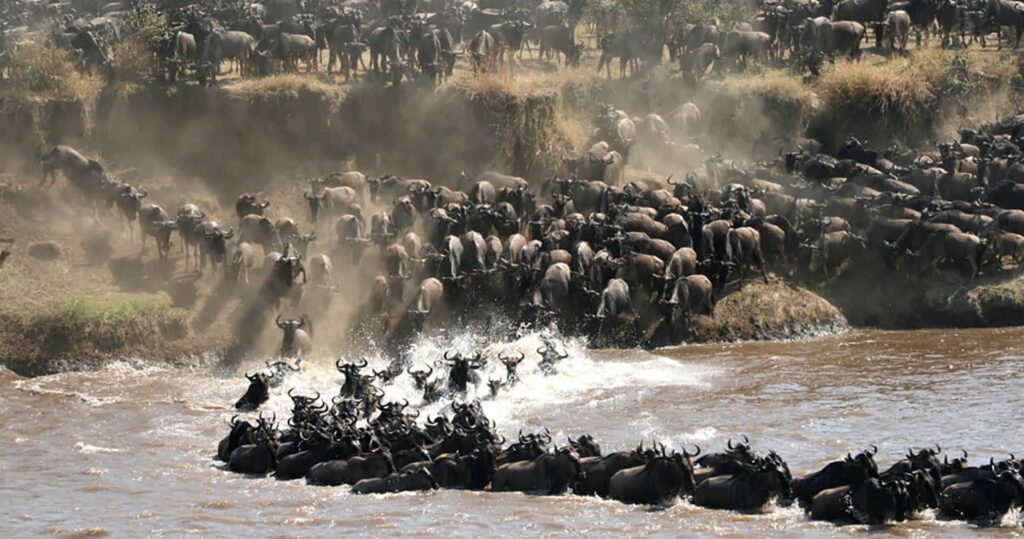
This is the part everyone talks about. Herds gather around the Mara River, sometimes waiting for hours before they decide to cross. The tension, the noise, the dust, it’s unforgettable.
These months offer the highest chance of catching dramatic scenes as the wildebeest migration in Tanzania reaches its peak in the north.
Quick emotion-based reminder: If this moment is on your bucket list, consider booking months earlier. Camps fill up fast because this is the most popular season for visitors from around the world.
November – The Return to the South
With rain returning to the south, the herds begin their slow drift back. Crowds thin out, but sightings remain excellent. If you want a more relaxed safari with good chances of seeing the movement, this can be a smart choice. It’s also another window to think about the best time to go to Tanzania for safari with fewer people around.
Choosing the Right Region in Serengeti
Each part of the Serengeti offers something unique during the migration.
Northern Serengeti – Best for River Crossings
This area offers the famous Mara River scenes. It’s rugged, dramatic, and busy with wildlife.
Western Corridor – Quieter but Still Exciting
Here you’ll find the Grumeti River. Crossings here are calmer, with fewer visitors and beautiful forest areas.
Southern Serengeti – Perfect for Calving
Wide open plains, newborn calves, stalking predators, this is nature at its most honest.
When Should You Plan Your Tanzania Great Migration Safari?
What this really means is… timing depends on what you want to see. Travelers usually fall into three groups:
- You want river crossings: Go July–October
- You want baby animals: Go December–March
- You want fewer crowds: Go April–June or November
Here’s a simple table to make it even clearer:
| Experience You Want | Best Months | Region |
| River crossings | July–October | Northern Serengeti |
| Calving season | December–March | Southern Serengeti |
| Balanced experience with fewer crowds | April–June | Western Corridor |
| Scenic green season | November | Central/South |
Insider Tips From Local Safari Guides
Here’s something that guides from Safaris in Tanzania often share: travelers who plan based only on the month often miss the fine details. Guides follow local rain patterns, herd movement reports, and historical data to place visitors in the right area at the right time.
How early should you book?
If river crossings are your goal, book at least six months ahead. Camps near the Mara River fill up quickly.
Which safari style works best?
Many guests mix their stay:
- Lodge for comfort
- Mobile camp for closeness to the herds
- Balloon experience for a different view
You can also explore options through the team at Safaris in Tanzania, who understand the land better than anyone.
Your Front-Row Seat to Nature’s Greatest Show Awaits
If you’re planning a true Tanzania great migration safari, timing is your biggest advantage. Whether you’re drawn to the drama of river crossings or the calm beauty of calving season, there’s no wrong month, only the right match for what you want to see. Each season gives you a new angle on one of the most powerful wildlife scenes on Earth.
CTA: You deserve a migration experience built around your dates and interests. Reach out to Safaris in Tanzania today and let their local experts help you plan an unforgettable safari that puts you exactly where the action is.
FAQ’s
Q1. What month is the Great Migration in Tanzania?
It moves all year, but the highlights shift from region to region.
Q2. Is July good for river crossings?
Yes. July to September is the strongest period for crossing chances.
Q3. Is the Serengeti migration predictable?
It follows a yearly cycle, but rain can shift timing slightly.
Q4. How long does the wildebeest migration in Tanzania last?
It’s a full 12-month cycle that repeats every year.
Q5. What if I want fewer crowds?
Choose April–June or November.